Why a Photograph Cannot Explain Lại Sơn Island
A Lại Sơn Island photograph can suggest a perfect escape; learn to read its framing, captions and visible details before using it to plan a visit.
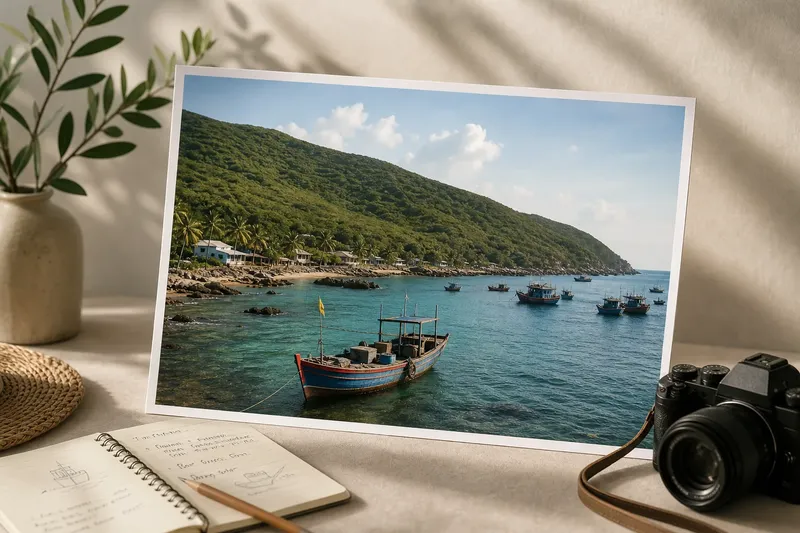
A Lại Sơn Island photograph can show a boat against a green slope and leave the rest of the day outside the frame. The image may make the island look like a single view, even though a photograph is only one person’s selection of subject, angle and moment.
Use photographs to notice details and spark questions, not to decide what island life is like from one scene. Look at how the image was made, what its caption claims and what remains uncertain.
How photographs frame Lại Sơn
A camera reduces a broad place to a rectangle. The photographer chooses a viewpoint, lens and instant; a crop can then remove details that would change how a viewer reads the scene.
Notice the composition itself. A boat placed against open water may appear solitary, while a cluster of boats can suggest a busy harbour. Neither arrangement explains the daily rhythms or purposes behind what is visible.
Captions shape interpretation, too. Words such as “untouched” or “empty” can turn a momentary impression into a sweeping claim. Separate what the photograph shows from what its caption asks you to believe.
Read the image carefully
Before sharing or relying on a picture, check what can be observed and what is only implied. Each observation should lead to a clear decision about how much weight to give the image.
- Check the caption. If it identifies a specific place and describes what is visible, treat that as a claim to verify; if it makes broad claims about island life, look for other context before repeating them.
- Inspect the edges. If the crop cuts off buildings, people or boats, treat the scene as selective; if the edges show a broader setting, use them as clues, not as a complete account.
- Look for a scale cue. If a familiar object such as a motorbike or doorway appears, use it cautiously to compare visible sizes; if not, avoid guessing distances from the frame.
- Notice the time and conditions. If the image has a date or weather context, keep your interpretation tied to that moment; if neither is available, do not assume the scene is typical.
- Separate people from scenery. If residents or workers are visible, recognise them as people going about their lives; if the frame excludes them, do not infer that the place is unused.
- Check the source. If the photographer or location is identified, use that information to ask a more precise question; if the source is unclear, treat location-specific claims as uncertain.
There is no need to inspect every image as if it were evidence in a dispute. A quick check of the caption, crop and source is usually enough to keep an appealing view in perspective.
Captions and context?
Does one photograph show everyday island life?
It shows a moment and a viewpoint, not a complete account of routines on Lại Sơn. Use it to notice visible details, but avoid turning a single scene into a claim about how residents live.
Can a caption confirm where a photo was taken?
A caption can identify a location, but it may be mistaken or incomplete. If the place matters to your plans, check a current map or ask a reliable local source.
What does an empty scene tell me?
Only that no people are visible in the chosen frame at that moment. The photographer may have selected a quiet instant or excluded activity beyond the crop.
How should I share a travel photo?
Use a specific, modest caption that distinguishes what you saw from what you infer. Avoid presenting a single view as a complete portrait of the island.
Use images without overclaiming
Say you find an undated image captioned “quiet fishing village on Lại Sơn”. It shows a few boats beside a slope, but no people, date or clear landmark. You note the boats and green hillside as visible details, then treat “quiet fishing village” as an unverified interpretation rather than a description of the whole island; the result is a useful visual reference without turning the caption into fact.
For your own pictures, add context that a frame cannot carry: where you stood in general terms, what was happening in that moment and what the image leaves out. Ask before making a close photograph of someone, and avoid sharing details that could expose private spaces.
What not to chase
It is not worth trying to reproduce a photograph’s exact colours, empty foreground or camera position. The effort can distract you from noticing what is actually in front of you, and the original conditions may not be present.
Instead, keep a short note alongside the image: name one visible detail and one thing the picture cannot establish. When you search for a Lại Sơn Island photograph, that habit helps you use the image as a starting point while leaving room for the island beyond its frame.