From Pantry to Shared Table: The Shape of an Island Meal
An island meal on Lại Sơn reveals how ingredients, preparation and shared dishes shape everyday eating, with practical ways to join a table respectfully.
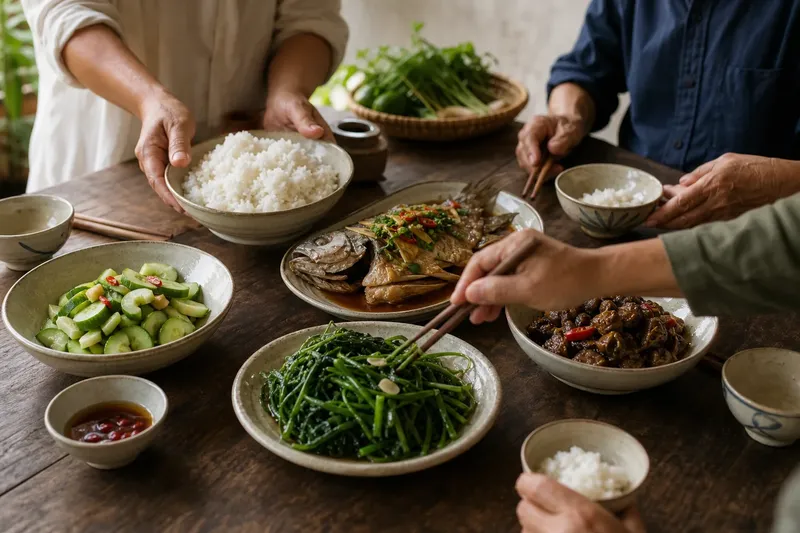
A bowl of rice lands beside a plate of fish as someone reaches across the table for greens. On Lại Sơn, an island meal can be understood through these everyday details: what is available, how it is prepared and how diners share it.
Reading the table
A shared meal is not a performance for visitors. It may be an ordinary household lunch, with dishes arranged so people can take what they want. Look at the relationships between food, cook and diners rather than treating each dish as a symbol.
Ingredients reach a kitchen through the surrounding sea, local growing and the practical work of buying, storing and preparing food. That does not mean every meal is seafood, or that all households eat alike. Weather, supply, appetite and household habits shape each occasion.
Notice what is cooked first, which dishes are placed within reach and how people serve themselves. Rice might anchor the meal, while a savoury dish is portioned out and a shared plate lets diners choose. The arrangement can support routine and conversation at once.
Instead of asking for “the authentic island meal”, ask what this particular meal can tell you—and what it cannot. One table offers a glimpse of one occasion, not a portrait of every household or season.
An imagined invitation
Say you are visiting a family on Lại Sơn and receive an invitation to eat at home. This is an invented situation, not a report of a real household. You arrive as lunch is being prepared, and the host is deciding how to use what is available rather than setting up a display.
In this imagined kitchen, one family member rinses rice and puts it on to cook. Another sorts ingredients for a fish dish and prepares greens. The cook seasons the food to suit the ingredients on hand, and a small bowl of dipping sauce goes within reach.
You ask where to sit, wait for the host’s cue before beginning and follow the household’s serving habits. If someone offers you a dish before you know its ingredients, ask politely what it contains. A quiet question is more useful than guessing from its appearance.
At the table, food passes between people. Someone may serve an older relative, invite you to try a dish or offer another helping. The observable result is an ordinary meal in which everyone has a place in the exchange. When lunch ends, clearing up and returning to the day’s tasks continue the scene.
The meal’s character does not rest in one special ingredient. It emerges from what is available, the work of preparation, familiar table habits and the people gathered to eat.
Ingredients and choices
Ingredients offer clues, but they are not labels. Fish can connect a meal to the coast and to the work of obtaining food, yet a dish also reflects the cook’s preferences, household needs and what could be bought or stored. Rice, vegetables, seasonings and condiments each have practical roles.
Ask what each ingredient contributes. Does it provide the main savoury dish, balance a strong flavour, add freshness or help make the meal comfortable to share? These questions keep attention on the food instead of turning one ingredient into a sweeping claim about island culture.
Preparation matters too. A one-pot dish may suit a busy household; a shared plate can make passing and choosing easy. Neither method needs a fixed cultural explanation. The cook may simply be using a familiar approach that fits the occasion.
Fresh ingredients, preserved foods and condiments serve different purposes. Do not infer a household’s resources or routines from one meal. If a host does not want to explain a recipe, accept that boundary; the meal remains worth noticing without a full account of every step.
What should you notice?
Why are dishes shared?
Shared dishes let diners choose portions and make passing food part of eating together. This may reflect hospitality or household habit, but the meaning depends on the people at the table.
Does every meal feature seafood?
No single menu represents every island meal, and a household may serve food that is not from the sea. Ingredients depend on what is available, what people want and how the meal fits the day.
How should you ask about a dish?
Ask simply what it is or how it is usually eaten, then listen without pressing for a recipe or cultural explanation. If the host is busy, wait for a quieter moment or let the conversation move on.
What if you cannot eat an ingredient?
Tell the host clearly before the meal if possible, and name the ingredient you need to avoid. Ask what is in a dish rather than guessing from its appearance; if a restriction concerns health or safety, follow advice from a qualified medical professional and do not rely on an uncertain answer.
Joining with respect
When invited to eat, let the host set the pace. Greet people, watch how others begin and offer to help without taking over the kitchen. If you are unsure whether to serve yourself or wait, ask.
- Check whether people are comfortable being photographed; if they agree, take a picture, but if they hesitate, put your camera away.
- Ask what a dish contains if you have a dietary restriction; if the ingredients are unclear, choose food you can identify or politely decline.
- Notice how others serve themselves; if diners take small portions, follow suit, but if the host serves guests directly, let them do so.
- Watch for the host’s cue about when to begin; if no cue is clear, ask before eating.
- Offer to help clear the table; if the host declines, thank them and leave the work to the household.
- Listen when someone explains a dish; if they do not offer a recipe or story, do not press for one.
These are gestures of consideration, not rules for every household. A host may prefer you to help yourself or may serve guests directly. Pay attention to the people in the room rather than acting out an idea of island hospitality.
It is not worth the effort to catalogue every flavour as if compiling a definitive portrait of Lại Sơn. Nor should you turn a family meal into a staged cultural lesson. A few attentive observations, made without interrupting the meal, are more respectful and accurate.
From meal to memory
After the imagined lunch, you might remember that the rice was ready before the fish, that greens sat alongside it and that the shared plate moved around the table. These are details from one occasion; a claim about what everyone on the island eats would reach far beyond them.
If you write or talk about a meal later, separate what you saw from what you inferred. “A fish dish was served with rice at this household lunch” describes an occasion. “This is how everyone on the island eats” makes a claim the occasion cannot support.
The sense of place comes from the whole arrangement: ingredients brought into the kitchen, a cook’s decisions, familiar serving habits and the company gathered to eat. An island meal is not a fixed menu to search for; it is a daily practice that changes with the household and the day.
When you encounter an island meal on Lại Sơn, keep your account specific. Notice what is served, how people share it and how lunch fits around their day. Those details make an island meal meaningful without asking one table to speak for an entire place.