How to Choose a Coastal or Inland Start on Lại Sơn
Choose a coastal or inland start on Lại Sơn to shape an easy morning and decide whether to begin with harbour activity or the island’s lanes.

Breakfast is still on the table when you decide where to wander first. A coastal or inland start on Lại Sơn can shape the morning: one puts the harbour’s working rhythm in view, while the other lets you follow the island’s everyday routes.
Choose by what interests you
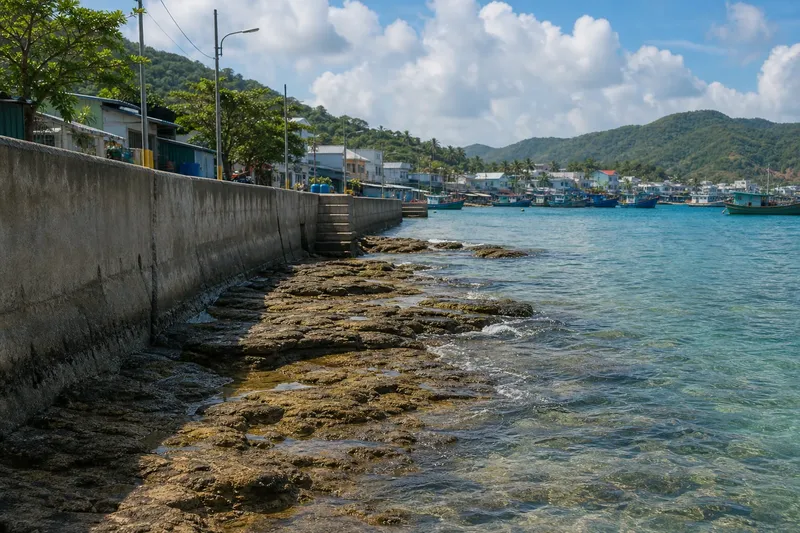
Start by deciding what you want to pay attention to, rather than trying to cover ground. The coast makes it easier to orient yourself by the shoreline and notice boats arriving or people going about harbour routines. Inland, turns between homes and small businesses offer a closer view of how the settled parts of the island connect.
These are different ways into the day, not competing claims to show the whole island. A quiet harbour moment does not tell you how the rest of the morning will unfold, and a lane you pass through is not a complete picture of neighbourhood life.
Begin near the harbour
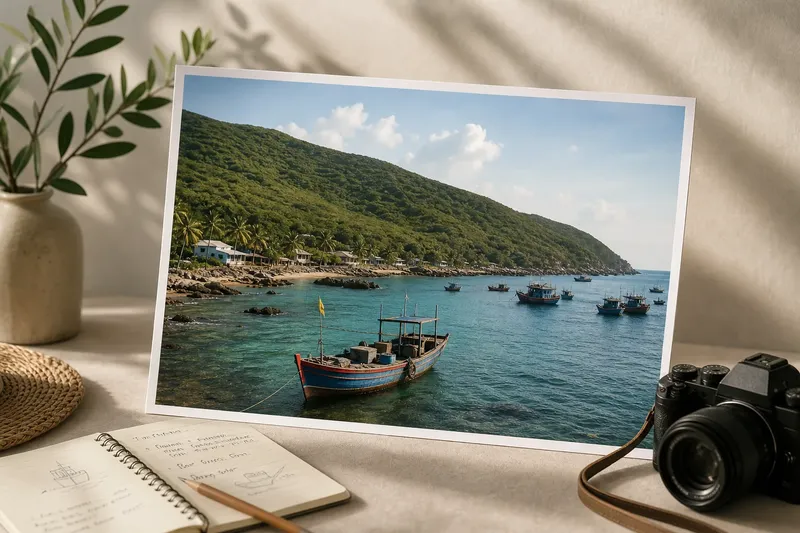
Choose a coastal start if you are curious about how the harbour fits into daily movement around Lại Sơn. From a public place, notice where people pause, how the road meets the water, and whether boats are coming or going. Keep clear of equipment, moorings and work areas; a closer look is not worth interrupting someone’s task.
Use the harbour as an orientation point, then decide whether to stay nearby or head towards a public lane. If the waterfront feels busy, exposed or uncomfortable, shorten the stop and change direction. There is no need to turn the morning into a circuit.
Follow the island’s lanes
An inland start suits you if you would rather notice the connections between homes, shopfronts and everyday errands. Walk on public lanes, leave entrances clear, and ask before photographing people or private property. A friendly greeting is enough; you need not turn a passing encounter into a conversation.
Because a lane may not offer a clear view of the shore, check your phone map before setting off and remember a recognisable public landmark. If you lose your bearings, return to the last place you recognise instead of taking an unfamiliar turn simply to keep moving.
Plan a comfortable outing
Before leaving, check the weather and any local access signs. Wear comfortable shoes suited to the route, carry drinking water and sun protection, and take a light layer if conditions call for it. Keep the plan flexible so you can change direction if a route feels uncomfortable or is busier than expected.
- Check the forecast: if rain or strong sun would make your chosen route uncomfortable, delay the walk or choose a more sheltered public lane.
- Check access signs: if a path is closed or marked for work, do not enter; choose another public route.
- Check your shoes: if they feel unstable on the surface, switch to a safer pair or keep the outing to a route you can manage comfortably.
- Check your water: if you do not have drinking water with you, stop somewhere suitable to get some before setting out.
- Check your phone map: if the route is unclear, save the starting point and landmark; if the map is unavailable, stay on familiar public streets and retrace your route.
- Check the activity around you: if a harbour area is busy with work, observe from a public place or move inland; if a lane is crowded, pause or choose another street.
Which route fits your morning?
Which route is easier to follow?
The harbour can offer a clear reference point because the shore is easy to recognise. Inland, turns may make orientation less obvious, so note a public landmark and be ready to retrace your route.
Can you combine both settings?
Yes, if the public routes connect conveniently and you have time to pause. Begin with the setting you most want to notice, then change direction when you feel ready rather than rushing to complete a loop.
What should you carry?
Take drinking water, sun protection and comfortable shoes, with a light layer if the weather calls for one. Check local access signs and adjust your plans to the conditions you encounter.
What is a respectful way to look around?
Stay in public areas and give working spaces, equipment and private entrances room. Ask before photographing people or private property, and move on if your presence would interrupt someone.
A worked morning plan
Say you finish breakfast near the harbour and want an unhurried outing, but are unsure whether to stay by the water. First, check the weather and access signs, then use the public waterfront as your starting point and watch from a clear spot without approaching working areas. If the harbour is busy or feels uncomfortable, take a public lane towards a familiar landmark; if it is calm and you are content there, pause before deciding whether to continue inland. The result is a choice based on the conditions you can see, with a straightforward way back rather than a fixed route to complete.
Skip the perfect route
It is not worth chasing a supposedly ideal moment or forcing a long circuit just to say you visited both settings. Choose one first stop, then change your plan if the route does not suit you. For a coastal or inland start on Lại Sơn, the useful question is whether you want the harbour’s working rhythm or the island’s lanes to set the pace of your morning.